

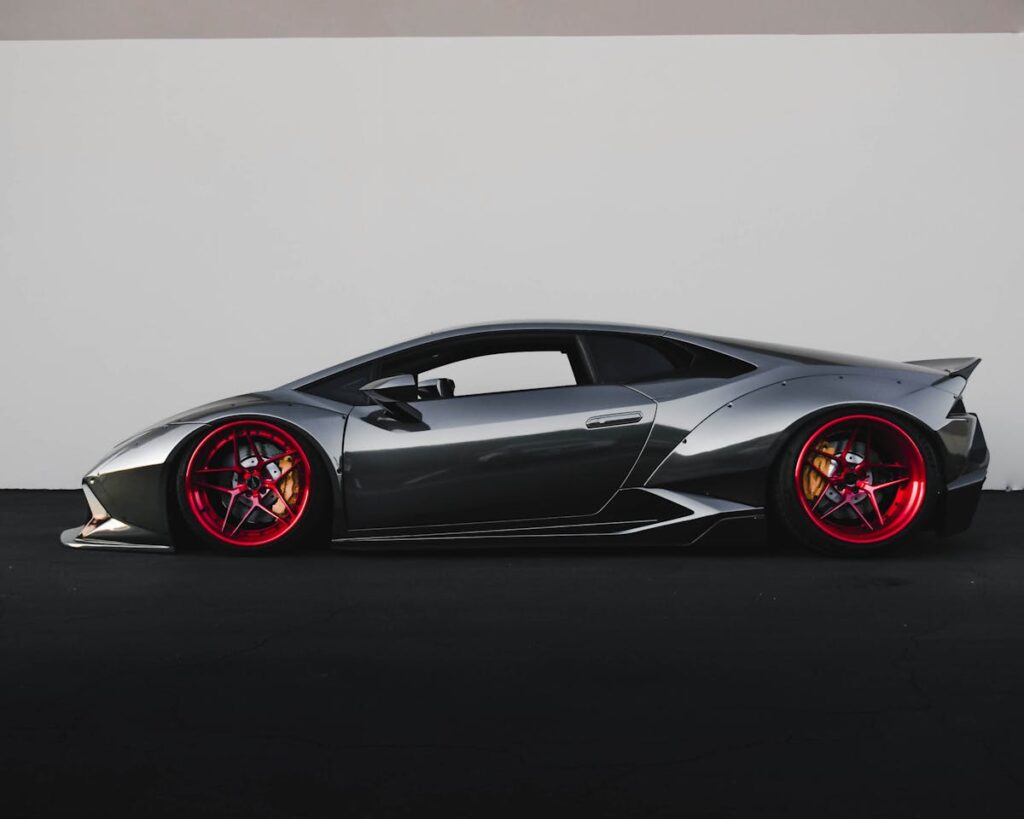
Vehicle wraps are one of the most cost-effective advertising mediums, generating 30,000–70,000 daily impressions at a cost of $0.04–0.15 per thousand impressions—far cheaper than billboards, TV, or digital ads. The Out of Home Advertising Association of America reports that 97% of drivers recall truck-side ads. AI design tools are making professional vehicle wrap design more accessible, but the technical requirements remain specific and demanding.
Vehicle Wrap Design Fundamentals
Template Systems
Every vehicle model requires a precise template that maps the 3D body surface to a 2D printable layout. Vehicle Templates and SignWarehouse provide dimensionally accurate templates for thousands of vehicle models. Templates include door handles, windows, wheel wells, bumpers, and panel lines—all of which must be accounted for in the design. Designing without a proper template guarantees alignment issues during installation.
Design Principles for Moving Surfaces
Readability at speed: Viewers see your vehicle for 3–8 seconds in traffic. The company name, phone number, or website must be readable at 25+ feet. Maximum 7 words of key information per side. Use fonts with high x-height and generous letter spacing (Helvetica Bold, Futura Heavy, or custom display fonts).
Color contrast: Design must be visible in all lighting conditions—bright sun, overcast, nighttime headlights. Avoid low-contrast combinations (yellow on white, light blue on silver). Dark text on light backgrounds provides the best all-condition readability.
AI Tools for Vehicle Wrap Design
Canva for Base Design
While Canva doesn’t have vehicle-specific templates, it’s excellent for creating the graphic elements—logos, patterns, typography treatments—that form the wrap design. Create at high resolution (minimum 150 DPI at actual vehicle scale) and export for placement in a vehicle template. Visit Canva
Adobe Illustrator for Production Files
The industry standard for vehicle wrap production files. Illustrator handles the vector artwork, panel-line registration, and large-format file management that wraps require. AI features include Generative Recolor (test color variations instantly) and Image Trace (convert raster graphics to scalable vectors). Visit Illustrator
Midjourney for Custom Graphics
Generate unique illustrative elements, patterns, and backgrounds that differentiate your wrap from template-based competitors. Effective prompts: “abstract geometric pattern for vehicle wrap, bold colors, seamless, professional, dynamic motion lines.” Use outputs as elements within the larger wrap layout.
3D Mockup Tools
Vecteezy and Mockup World offer free vehicle mockup templates. For realistic 3D proofing before printing, tools like Boxshot or dedicated wrap proofing software show how the design wraps around the actual vehicle body.
Types of Vehicle Wraps
Full wrap: Covers the entire vehicle surface. Most impactful but most expensive ($2,500–5,000 for production). Requires the most precise template work. Partial wrap: Covers 50–75% of the vehicle, often combining wrap with the vehicle’s existing paint color. More economical ($1,500–3,500). Spot graphics/decals: Individual graphic elements applied to specific areas (doors, tailgate, hood). Most affordable ($300–1,000) and easiest to install and remove.
Print Specifications
Resolution: 150 DPI at actual print size for large wraps (vehicles are viewed from 5+ feet). 300 DPI for close-up areas (door panels, hood). Color mode: CMYK for most wide-format printers. Some shops use RGB workflow with ICC profiles. Confirm with your print shop. Material: Cast vinyl (3M 1080, Avery Dennison Supreme Wrapping) for complex curves; calendered vinyl for flat surfaces only. Lamination: Gloss, matte, or satin overlaminate protects against UV fading and scratches. Matte finish is currently the most popular.
Fleet Wrap Design
For businesses with multiple vehicles, consistency is critical. Create a scalable design system that works across different vehicle types (sedans, vans, trucks, SUVs). Identify design elements that remain constant (logo placement, brand colors, website URL) and elements that flex (background graphics, vehicle-specific layouts). AI tools help generate vehicle-specific adaptations from a master design file.
FAQ
How long do vehicle wraps last?
Quality cast vinyl wraps last 5–7 years with proper care. Calendered vinyl lasts 3–5 years. Longevity depends on sun exposure, washing habits, and installation quality. Indoor-parked vehicles last longest.
Can I design my own vehicle wrap?
You can design the creative elements (graphics, typography, layout), but production-file preparation should be done by someone familiar with wrap installation. Panel alignment, bleed areas, and curve compensation require technical expertise. Many wrap shops offer design services or will prepare your creative for production.
What information should a vehicle wrap include?
Essentials: company name, logo, phone number or website, and a brief tagline or service description. Optional: QR code (position where it’s scannable when parked), social media handles, and licensing/insurance numbers if required by your industry.
Create Your Own QR Code for Free — Need a custom QR code for your project, business, or personal use? Try our free QR code generator to create high-quality QR codes instantly in PNG, SVG, and more formats.