

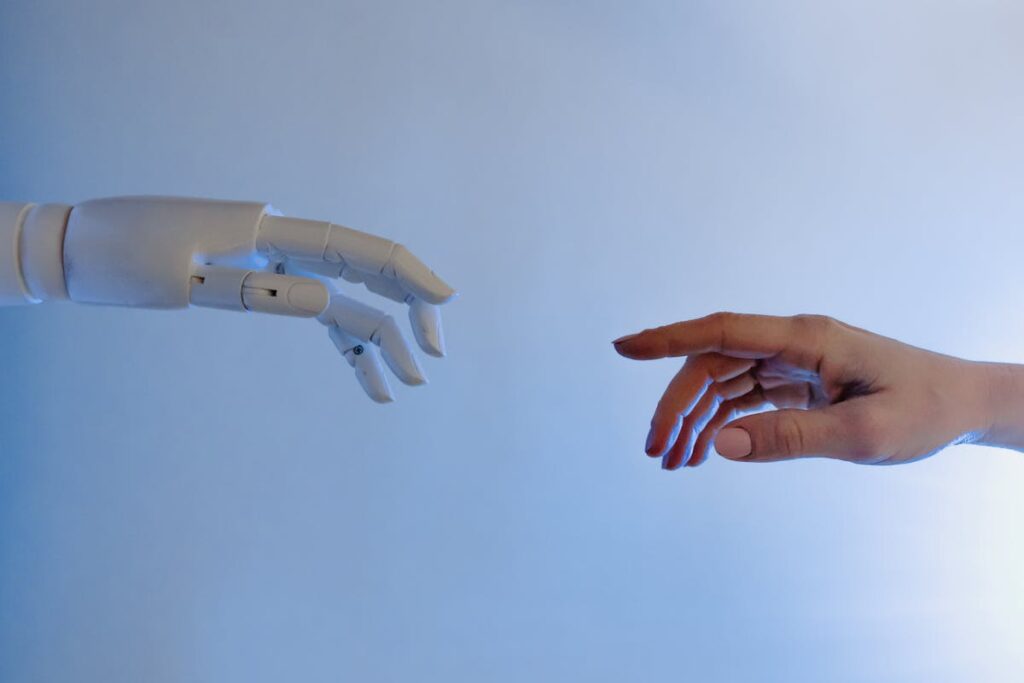
As we look beyond 2026, AI’s impact on design is accelerating in ways that will reshape creative professions, business models, and the very definition of what it means to be a designer. This article examines the trends, technologies, and predictions that will define the next era of AI-powered design, based on current research trajectories, patent filings, and statements from leading AI labs and design platforms.
Emerging Technologies
Real-Time AI Co-Creation
Current AI design tools operate in a generate-then-edit paradigm. The next generation will feature true real-time collaboration—AI as a live design partner that responds to every brushstroke, color choice, and layout adjustment with instant suggestions and alternatives. Adobe’s Project Neo and Figma’s AI initiatives are moving toward this vision, where the designer and AI iterate simultaneously rather than sequentially.
Multimodal Design Systems
Future AI will understand design across all mediums simultaneously. Describe a brand concept in natural language and receive: a logo system, website design, social media templates, packaging, motion graphics, and a sonic brand identity—all coherent and production-ready. Google’s Gemini and OpenAI’s GPT architecture are already multimodal; the design application layer is rapidly catching up.
Neural Interfaces for Design
Brain-computer interfaces (BCIs) are progressing from medical devices to creative tools. Neuralink and other BCI companies are developing interfaces that could eventually allow designers to create directly from thought. While mainstream adoption is likely a decade away, early experiments in EEG-controlled generative art are already producing results.
The Evolution of Design Roles
From Pixel Pusher to Prompt Architect
The designer’s core skill is shifting from tool mastery (Photoshop, Illustrator) to creative direction and prompt engineering. Understanding how to communicate visual intent to AI systems—through text, reference images, and iterative refinement—is becoming as fundamental as understanding typography and color theory.
AI Design Managers
A new role is emerging: professionals who manage fleets of AI design tools, create prompt libraries, quality-check AI outputs, and maintain brand consistency across AI-generated content. This role combines design knowledge with AI literacy and production management skills.
Computational Design Thinkers
Designers who understand both creative principles and AI capabilities will command the highest value. They don’t just use AI—they understand which problems AI can solve, which require human creativity, and how to structure workflows that leverage both optimally.
Industry-Specific Predictions
Architecture and Spatial Design
AI will generate complete building designs from natural language briefs, incorporating structural engineering, energy efficiency calculations, local building codes, and aesthetic preferences simultaneously. Generative design (exploring thousands of structural variations to find optimal solutions) will become standard practice. Autodesk’s research in this space is already producing functional architectural proposals.
Gaming and Entertainment
Procedural content generation powered by AI will create effectively infinite game worlds with unique art, characters, and narratives. Unreal Engine’s and Unity’s AI integrations will enable small indie studios to produce content at AAA visual quality. The distinction between “handcrafted” and “AI-generated” game art will blur to irrelevance for most players.
Healthcare and Medical Design
AI-designed medical devices, prosthetics customized to individual patient anatomy, and drug packaging that adapts to patient literacy levels. AI-generated patient education materials that adjust visual complexity based on health literacy assessments. The FDA is already developing frameworks for AI-assisted medical device design.
Ethical Considerations
Attribution and Credit
As AI becomes more integral to design, questions of attribution intensify. Who deserves credit for an AI-generated design—the prompt writer, the tool developer, or the AI training data contributors? Industry standards are needed, and organizations like AIGA and the Design Council are actively developing guidelines.
Bias in AI Design
AI models trained on historical design data perpetuate existing biases: Western-centric aesthetics, limited representation of diverse bodies and cultures, and conventional gender presentations. Addressing this requires diverse training data, bias auditing tools, and conscious effort by designers using AI to request and select diverse outputs.
Environmental Impact
Training large AI models requires enormous computational resources. A single large model training run can produce as much CO2 as five cars over their lifetimes. The industry must balance AI’s efficiency gains (reducing physical prototyping, travel for client meetings, print waste) against the energy cost of AI computation. Green AI initiatives focus on more efficient model architectures and renewable-powered data centers.
Preparing for the Future
Skills to Develop Now
Prompt engineering: The ability to communicate creative intent to AI systems effectively. AI literacy: Understanding capabilities, limitations, and ethical implications of AI tools. Cross-disciplinary thinking: Combining design with data analysis, business strategy, and technology. Human-centered design: Empathy, user research, and design thinking remain irreplaceable human skills. Adaptability: The tools will change every 6–12 months. The ability to learn quickly and integrate new tools matters more than mastery of any single platform.
Resources for Continuing Education
Interaction Design Foundation: Comprehensive UX and design courses. Coursera: AI and machine learning courses from top universities. Nielsen Norman Group: Research-based design guidelines. Smashing Magazine: Practical web design tutorials and AI coverage.
FAQ
Will AI make designers obsolete?
No—but it will make certain design tasks obsolete. Designers who adapt by moving up the value chain (strategy, creative direction, human-centered problem solving) will thrive. Those who resist AI and compete on execution alone will struggle. History shows that automation eliminates tasks, not professions—and creates new roles in the process.
What’s the timeline for these changes?
Real-time AI co-creation: 2026–2027. Multimodal brand generation: 2027–2028. Neural interface design: 2030+. Full generative architecture: 2028–2030. These timelines are estimates based on current development trajectories and could accelerate with breakthroughs.
How should design education adapt?
Design programs should integrate AI literacy alongside traditional skills, teach prompt engineering as a core competency, emphasize strategic thinking and human factors over tool-specific training, and prepare students for hybrid roles that combine design with technology and business strategy.
Create Your Own QR Code for Free — Need a custom QR code for your project, business, or personal use? Try our free QR code generator to create high-quality QR codes instantly in PNG, SVG, and more formats.