

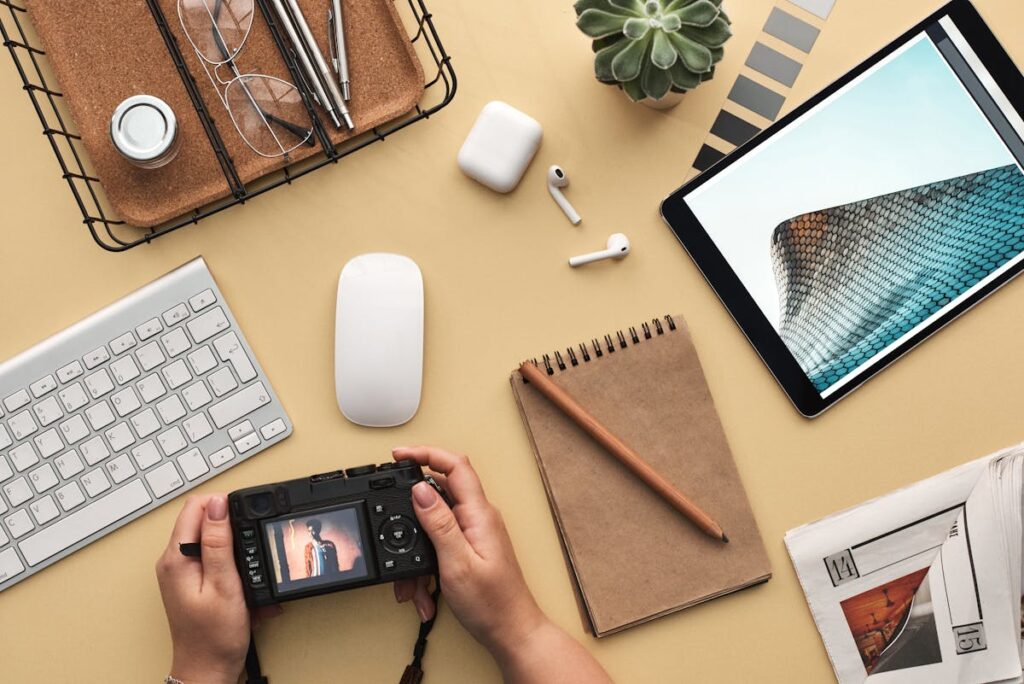
Graphic design trends in 2026 are overwhelmingly shaped by AI tools and the creative possibilities they unlock. From AI-generated maximalism to nostalgic retro-futurism, from hyper-personalized design at scale to deliberately imperfect anti-design aesthetics, the design landscape reflects both the capabilities and the cultural response to widespread AI adoption. This guide identifies the most significant design trends of 2026, explains the forces driving them, and provides practical guidance for incorporating them into your work.
The Defining Trends of 2026
1. AI-Assisted Maximalism
After years of minimalist dominance, maximalism has returned — supercharged by AI. Designers use tools like Midjourney and Stable Diffusion to create dense, layered compositions that would be prohibitively time-consuming to produce manually. Think richly textured backgrounds, overlapping visual elements, complex color palettes, and intricate patterns combined with bold typography. The maximalist trend is a direct product of AI enabling visual complexity at production speed.
How to apply it: Layer AI-generated textures and patterns with photography and typography. Use 4-5 colors instead of 2-3. Experiment with overlapping and collage-style compositions. Balance complexity with clear hierarchy — maximalism should feel intentional and curated, not chaotic.
2. Retro-Futurism and Y2K Revival
The Y2K aesthetic revival that started in fashion has fully arrived in graphic design. Chrome effects, gradient meshes, holographic textures, bubble typography, and iridescent color palettes dominate social media design and brand identity. This trend blends nostalgia for early-2000s digital aesthetics with modern AI-enabled execution — the visual language of the past reimagined with today’s technology.
3. AI Transparency and Meta-Design
A fascinating cultural trend: designers openly incorporating AI-generated elements as an aesthetic choice rather than hiding AI involvement. Visible AI artifacts, generation prompts displayed as design elements, and hybrid human-AI compositions where the boundary between human and machine creativity is intentionally blurred. This trend reflects a growing cultural comfort with AI as a creative collaborator.
4. Sustainable and Eco-Conscious Design
Environmental awareness continues to influence design decisions at every level. Earthy, muted color palettes inspired by natural materials. Recycled and organic textures. Minimal use of ink-heavy designs for print (reducing environmental impact). Digital-first design approaches that minimize physical production. Brands are expected to communicate sustainability not just in words but in their visual language.
5. 3D and Spatial Design
3D elements in traditionally 2D design contexts continue to expand. AI tools like Spline, Blender with AI add-ons, and Midjourney’s 3D-style outputs make three-dimensional design accessible to 2D designers. Isometric illustrations, 3D typography, rendered product mockups, and spatial interfaces (influenced by Apple Vision Pro and spatial computing) blur the line between graphic design and 3D art.
6. Hyper-Personalization at Scale
AI enables creating personalized design variations at scale — different hero images for different audience segments, personalized email designs based on user behavior, and dynamic social media content that adapts to viewer preferences. This is fundamentally new: mass-produced design that feels individually crafted. Tools like Canva and Adobe Express with their AI features make this accessible to small teams.
7. Neo-Brutalism in Digital Design
Neo-brutalist web and app design features bold borders, raw backgrounds, unconventional layouts, and deliberate visual tension. It is a reaction against the polished sameness of modern design systems. Key characteristics: thick black borders, bright contrasting colors, visible grids, raw/system fonts, and layouts that break conventional alignment rules. The trend values authenticity and personality over polish.
8. Kinetic Typography
Motion typography in social media, presentations, and web design. AI animation tools make it possible to create dynamic text compositions that react, transform, and animate in ways that static typography cannot. Tools like CapCut, Canva Magic Animate, and Runway enable kinetic typography for designers without motion design expertise.
Color Trends 2026
Digital lavender and lilac: Soft purples continue from 2025, now paired with deeper violet accents. Communicates calm technology, wellness, and approachable innovation.
Earth tones with neon accents: Muted natural palettes (sage, terracotta, sand) punctuated by electric accent colors (neon green, hot pink, electric blue). The contrast between organic base and digital accent reflects the nature-technology tension of 2026.
Monochromatic depth: Single-hue palettes with extensive tonal variation. Rather than using multiple colors, designers create visual interest through shades, tints, and tones of one color family. This trend produces sophisticated, cohesive designs with surprising visual richness.
Typography Trends 2026
Variable fonts: Fonts that animate between weights, widths, and styles. Variable fonts enable responsive typography that adapts to screen sizes and creates dynamic visual effects. V-Fonts catalogues available variable fonts.
Oversized serifs: Display serifs at massive sizes create dramatic, editorial-style layouts. Contrast with clean sans-serif body text for hierarchy.
Handwritten and imperfect type: Counter-trend to AI polish. Hand-lettered typography communicates authenticity and human craft in an increasingly AI-generated landscape.
Staying Current Without Chasing Trends
The most effective approach to trends is selective adoption. Not every trend applies to every brand or project. Follow design publications like It’s Nice That, Designboom, and Creative Bloq to stay informed. Adopt trends that align with your brand personality and audience expectations. Adapt trends to your brand rather than adopting them wholesale.
Conclusion
Design trends in 2026 reflect the creative profession’s evolving relationship with AI — some trends are enabled by AI (maximalism, personalization at scale, 3D accessibility), some are reactions against AI (handwritten type, anti-design, deliberate imperfection), and some embrace AI as a cultural phenomenon (AI transparency, meta-design). The most successful designers in 2026 are those who understand these forces and deploy trends strategically, using them to make their work more relevant and engaging while maintaining the timeless design principles that transcend any trend cycle.
Create Your Own QR Code for Free — Need a custom QR code for your project, business, or personal use? Try our free QR code generator to create high-quality QR codes instantly in PNG, SVG, and more formats.