

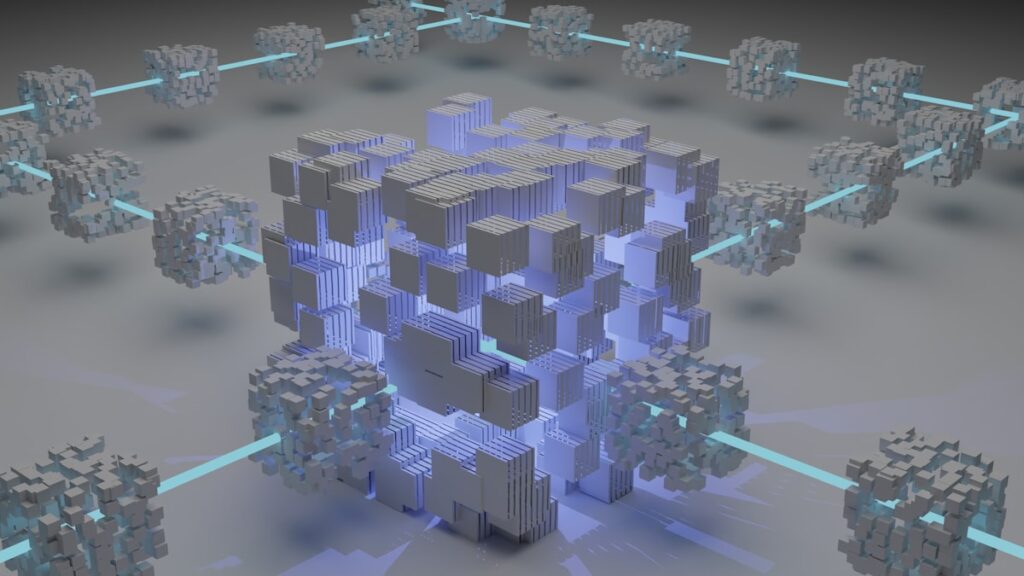
Startup Lets Researchers Test Blockchain Tasks on Quantum Computers for the First Time
PostQuant Labs has launched a pioneering blockchain testnet that allows quantum processors, GPUs, and CPUs to work side by side, enabling researchers to test whether quantum computing offers real advantages for blockchain operations. The testnet has attracted 13,000 sign-ups and early participation from six research teams worldwide, making it the first platform where blockchain tasks can be benchmarked across fundamentally different computing architectures. The initiative could reshape our understanding of how quantum computing will interact with distributed ledger technology.
How the Hybrid Testnet Works
PostQuant’s testnet creates a unified execution environment where blockchain consensus algorithms, cryptographic operations, and optimization tasks can be distributed across quantum processors, conventional GPUs, and CPUs based on which architecture is best suited for each specific computation. The platform supports D-Wave’s quantum annealing systems for optimization problems, IBM’s gate-based quantum processors for cryptographic tasks, and standard GPU clusters for comparison benchmarks. Researchers can submit workloads through a standardized API and receive detailed performance metrics including solution quality, time-to-solution, and energy efficiency across all architectures.
Early Results Show Quantum Advantages
In early internal tests, PostQuant reports that D-Wave’s Advantage2 quantum annealing system outperformed configurations of 80 H100 GPUs and 480 CPU cores on solution quality, time-to-solution, and energy efficiency for specific optimization problems relevant to blockchain consensus. The quantum advantage was most pronounced for combinatorial optimization tasks such as transaction ordering, network routing, and validator selection — operations that are fundamental to blockchain network performance. However, researchers caution that these advantages are currently limited to specific problem types and sizes, and that general-purpose quantum advantages for all blockchain operations remain years away.
Research Applications and Use Cases
The six initial research teams are exploring a diverse range of applications on the testnet. Projects include testing quantum-resistant consensus mechanisms that could protect blockchain networks against future quantum attacks, optimizing DeFi protocol parameters using quantum annealing, developing quantum random number generators for improved blockchain security, and benchmarking post-quantum cryptographic algorithms in a live blockchain environment. The diversity of research directions reflects the broad potential impact of quantum computing on blockchain technology.
Industry Significance
PostQuant’s testnet arrives at a critical moment for both the quantum computing and blockchain industries. As quantum hardware rapidly improves, the blockchain community urgently needs empirical data about how quantum computing will affect network security, performance, and design. The testnet provides the first platform for generating this data in a controlled, reproducible environment. Several major cryptocurrency foundations and DeFi protocols have expressed interest in funding research on the platform, recognizing that understanding quantum-blockchain interactions today is essential for preparing their networks for a quantum-enabled future.
Create Your Own QR Code for Free — Need a custom QR code for your project, business, or personal use? Try our free QR code generator to create high-quality QR codes instantly in PNG, SVG, and more formats.