

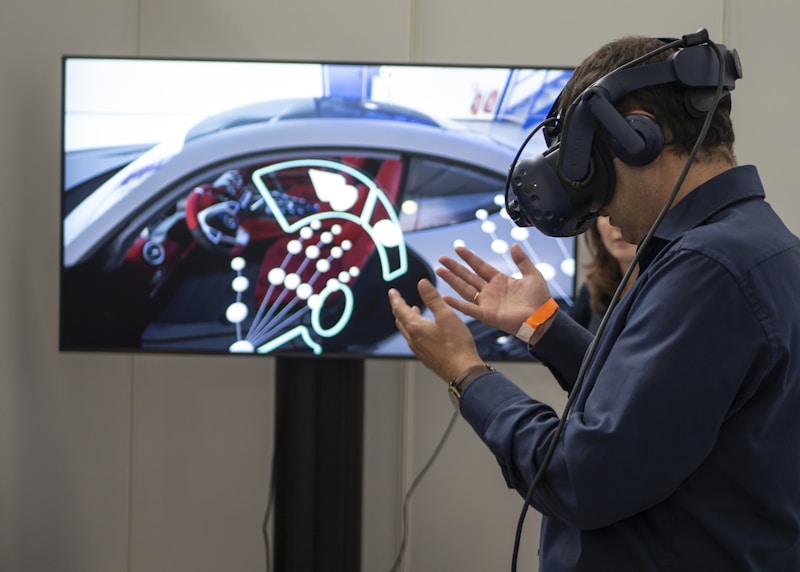
The metaverse in 2026 bears little resemblance to the grand visions promoted during the 2021-2022 hype cycle, yet the technologies underlying those predictions have matured into practical applications generating substantial revenue and user engagement in ways that few predicted. The consumer metaverse of persistent virtual worlds and digital real estate has largely failed to materialize, but enterprise spatial computing, AI-powered virtual collaboration, and mixed reality applications have created a $47 billion market that continues growing at 35% annually as organizations discover concrete ROI from immersive technologies.
What Failed: Consumer Metaverse
Meta’s Horizon Worlds peaked at 300,000 monthly active users in 2024 before declining to under 100,000, a fraction of the billions CEO Mark Zuckerberg envisioned. Virtual real estate platforms including Decentraland and The Sandbox saw land values collapse by 95% from their 2022 peaks as speculative interest evaporated. The fundamental problem was the absence of a compelling consumer use case that justified wearing a headset for extended periods. Social VR applications struggled to compete with the convenience of smartphones and the richness of in-person interaction, while virtual commerce failed to overcome the friction of navigating 3D environments for purchases more easily completed through traditional e-commerce.
What Succeeded: Enterprise Spatial Computing
The most successful metaverse applications have emerged in enterprise contexts where immersive technology solves specific, measurable business problems. Surgical simulation platforms from Osso VR and Medivis train medical residents in complex procedures with outcomes data showing 230% improvement in surgical proficiency compared to traditional training methods. Architecture firms use collaborative VR design reviews that reduce client revision cycles from an average of 7 to 2.5 iterations. Manufacturing companies including Boeing and Lockheed Martin use AR-guided assembly instructions that reduce error rates by 90% and training time by 75% for complex assembly tasks.
The Apple Vision Pro Effect
Apple’s entry into spatial computing with Vision Pro, while not achieving mass consumer adoption at its $3,499 price point, validated the technology category and established quality standards that elevated the entire market. The device’s passthrough mixed reality, eye-tracking interface, and spatial computing OS demonstrated that headset-based computing could be intuitive and useful rather than isolating and nauseating. More importantly, Apple’s involvement attracted enterprise software developers who had previously dismissed the category, resulting in a surge of professional applications for architecture, healthcare, engineering, and education that found willing corporate purchasers.
What Comes Next
The convergence of lightweight AR glasses, AI agents, and spatial computing is creating a new paradigm that may finally deliver on some metaverse promises without requiring users to strap on heavy headsets. Meta’s Orion prototype demonstrates AR glasses approaching the size and weight of conventional eyewear, while Apple and Samsung are developing similar products for launch in 2027-2028. These devices, combined with AI assistants that can understand and interact with the physical world through spatial awareness, suggest that the metaverse’s ultimate form may be an AI-enhanced layer over reality rather than an alternative virtual world. Analysts project the combined spatial computing market will reach $250 billion by 2030, driven primarily by productivity applications rather than the entertainment and social experiences that dominated early metaverse narratives.
Create Your Own QR Code for Free — Need a custom QR code for your project, business, or personal use? Try our free QR code generator to create high-quality QR codes instantly in PNG, SVG, and more formats.