

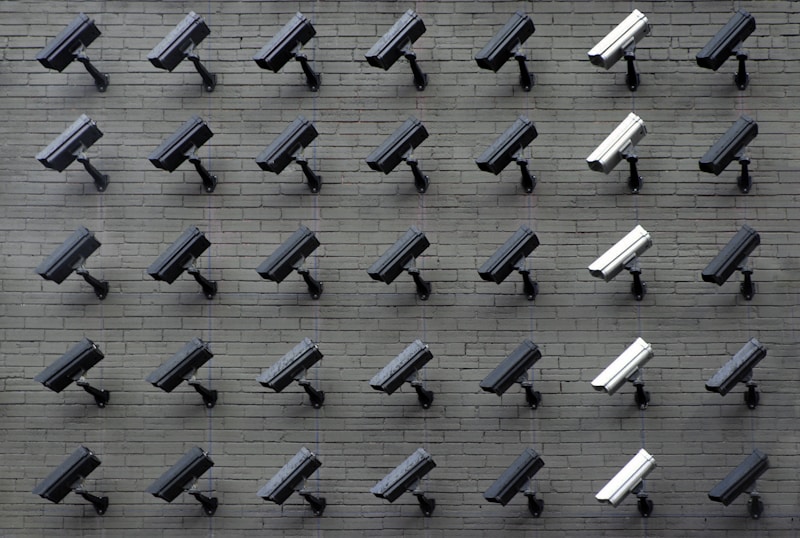
The global privacy landscape has reached a paradoxical inflection point where artificial intelligence simultaneously represents the greatest threat to personal privacy and the most powerful tool for protecting it. As AI surveillance systems achieve unprecedented capabilities in facial recognition, behavior prediction, and data correlation, a parallel wave of AI-powered privacy technologies is emerging that can anonymize data streams, detect surveillance, and enforce consent preferences automatically, creating an arms race between privacy invasion and privacy protection that will define the digital rights landscape for decades.
AI Surveillance Capabilities in 2026
Modern AI surveillance systems have evolved far beyond simple facial recognition. Behavioral analytics platforms deployed in retail environments, public spaces, and workplaces can identify individuals by their gait, posture, and movement patterns even when faces are obscured. Emotion detection AI claims to infer psychological states from micro-expressions, voice patterns, and physiological indicators, with applications ranging from airport security screening to employee monitoring. Predictive policing systems correlate data from social media, financial transactions, location history, and communication metadata to generate risk scores for individuals, raising fundamental questions about presumption of innocence and algorithmic bias. China’s social credit system now processes data from over 600 million surveillance cameras, while US law enforcement agencies operate facial recognition databases containing over 750 million images collected without individual consent.
AI-Powered Privacy Protection
The privacy technology sector has responded with increasingly sophisticated countermeasures. Adversarial fashion uses patterns designed to confuse computer vision systems, with companies like Cap_able producing clothing that prevents AI from correctly classifying the wearer’s body and identity. Privacy-preserving computation techniques including homomorphic encryption, secure multi-party computation, and federated learning enable data analysis without exposing underlying personal information. Apple’s Private Cloud Compute and Google’s Protected Computing framework use confidential computing hardware to process AI requests in encrypted enclaves that prevent even the cloud provider from accessing user data. Decentralized identity systems built on blockchain technology give individuals control over their digital credentials without depending on centralized identity providers.
The Regulatory Patchwork
Governments worldwide are struggling to create coherent regulatory frameworks that balance innovation with privacy protection. The EU’s AI Act, which took effect in February 2025, bans real-time biometric surveillance in public spaces with narrow law enforcement exceptions, while mandating transparency and impact assessments for high-risk AI systems. The US lacks comprehensive federal privacy legislation, resulting in a patchwork of state laws with varying requirements that create compliance complexity for organizations operating nationwide. India’s Digital Personal Data Protection Act establishes consent-based data processing requirements but includes broad government access exceptions that privacy advocates criticize as undermining the law’s protective intent.
Finding the Balance
The path forward requires technological, regulatory, and cultural solutions working in concert. Privacy by design principles that embed privacy protections into AI systems from the architectural level rather than adding them as afterthoughts are gaining traction among responsible developers. Data minimization techniques that limit AI systems to processing only the specific data needed for their intended function reduce the privacy footprint of AI applications. Public awareness and digital literacy programs help individuals understand and exercise their privacy rights in an AI-mediated world. The organizations and societies that successfully navigate this balance will demonstrate that advanced AI capabilities and robust privacy protections are not inherently contradictory but can be mutually reinforcing when designed with intention and accountability.
Create Your Own QR Code for Free — Need a custom QR code for your project, business, or personal use? Try our free QR code generator to create high-quality QR codes instantly in PNG, SVG, and more formats.