

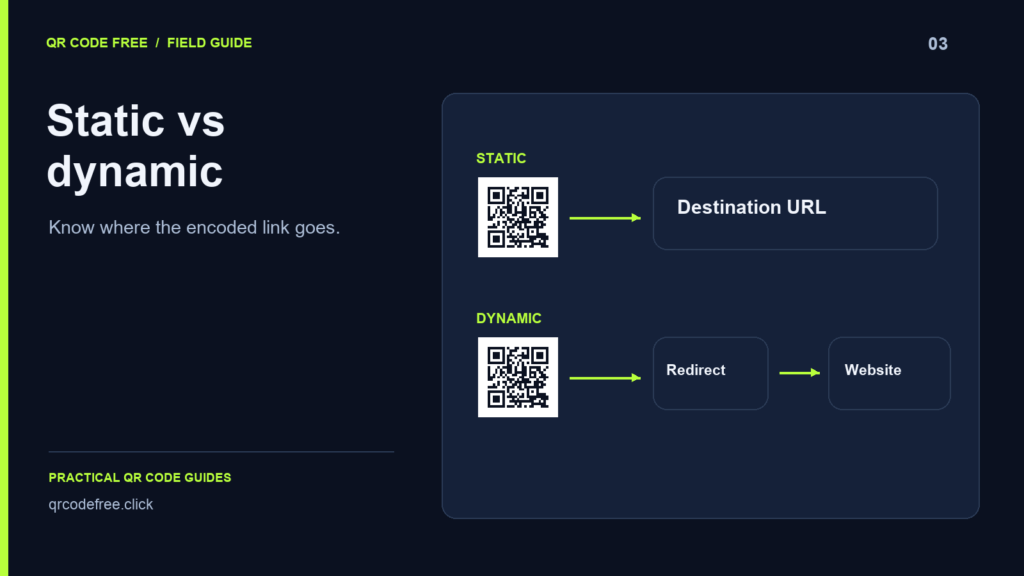
A static QR code stores a fixed payload in the pattern. A product marketed as a dynamic QR code usually stores a fixed redirect URL whose destination can be changed by a service. The image remains fixed in both cases; the difference is what happens after the URL is opened.
What a static code gives you
You can encode a public URL, text, Wi-Fi credentials or contact data directly. No redirect service is needed to read the encoded information. If it is a web address, the destination still needs to remain available.
Changing the encoded fields requires a new image. You can, however, change the content on a web page while keeping its existing address. A static code pointing to that address continues to reach it.
What a managed redirect adds
A redirect service can change where its printed URL leads and may offer scan-related reporting. Those features belong to the service, not the QR pattern. Check what happens if a plan expires, the account closes, the service changes its rules or a redirect stops responding.
A third option: your own URL
If you control a domain, a short public path can point to a page or redirect that you manage. This can help maintain a printed destination, but you take responsibility for hosting, redirects, security and continuity. The exact setup depends on your website.
Choose for the lifetime of the printed item
- For a fixed contact payload, consider whether the details may change soon.
- For a menu, a stable page can let you change the menu without changing its URL.
- For packaging, plan who maintains the destination over time.
- For a campaign, verify how analytics and redirects actually work before printing.
What this site provides
The generator creates static QR codes. It does not provide an editable redirect account, hosting for your linked documents or scan analytics. It exports PNG and SVG for your own use.
Scan the final image and open the destination while signed out of your own accounts. A readable pattern is only one part of a working experience. See campaign parameters and density.